1. Explain the concept of sensory memory.
Sensory Memory is the ability to retain impressions of sensory information after the original stimulus has ceased. there are two types : Ionic and Echoic memory.
2. Give an example of sensory memory.
Echoic Memory: sensory memory related to hearing, it last less than four seconds.
3. What is the capacity of our sensory memory?
The capacity of sensory memory is very short it last about four seconds.
4. Describe the concept of short-term memory.
The capacity of holding a small amount of information in mind in an active readily available state, for a short period of time.
5. What is the "magic number" as it relates to short-term memory and who conducted the experiment which established this measurement
The capacity of the sensory or short term memory is measured in seconds, the is an estimate that this capacity is seven, plus or minus two units. This is known as the Miller Law.
6. What is chunking?
Chunking is a strategy for making more efficient use of short-term memory by recoding information or organizing items into familiar manageable units.
7. What has been determined to be the ideal size of "chunks" for both letters and numbers?
the ideal size has been referred as two, three, and six as the ideal size of "chunks" for both letters and numbers.
8. Which mode of encoding does short-term memory mostly rely on, acoustic or visual?
Short-term memory is believed to rely more on acoustic coding than visual coding.
9. Explain the duration and capacity of long-term memory.
Long-term memoey can las as little as day or as long as decades. The capacity of the long term memory acn be decades and then begin to fade over time. it can store lts of information for lots of time.
10. Explain in detail the Atkinson-Shiffrin Model of memory.
This model is a proposal of the memory structure, it proposes that human memory iinvolves a sequence of three stages, Sensory Memory: retain information in a sort of unprocessed way trough a stimulus for less than a second, Short-Term Memory: allows us to remember information long enough to use it, Long-term memory: provides the lasting retention of information.
11. Identify three criticisms or limitations of the Atkinson-Shiffrin Model of memory.
Something that is criticized of this model is the it does not include any subdivision in the stages of memory, because it has a linear structure. The model does not acknowledge the asynchronous of the neural activity.
This model deals with the forms of memory, but it does not take into account which information is presented can then be seen as a form of a power check that could not be disrupted.
12.Explain the Levels of Processing Model of memory.
13. What is maintenance rehearsal - give an example.
Maintenance rehearsal is a type of rehearsal proposed by Craik and Lockhart in their Levels of Processing Model of memory. Maintenance rehearsal involves rote repetition of an item's auditory representation. Different to elaborative rehearsal, this type of rehearsal does not lead to stronger or more durable memories.
14. What is elaborative rehearsal - give an example.
Elaborative rehearsal is a type of rehearsal proposed by Craik and Lockhart in their Levels of Processing model of memory. Elaborative rehearsal involves deep sematic processing of a to-be-remembered item resulting in the production of durable memories.
For example, if you were presented with a list of digits for later recall (4968214), grouping the digits together to form a phone number transforms the stimuli from a meaningless string of digits to something that has meaning.
15. Who developed the Levels of Processing Model and the concepts of maintenance and elaborative rehearsal?
Fergus Craik and Robert Lockhart
miércoles, 20 de octubre de 2010

miércoles, 13 de octubre de 2010
How Does Our Memory Work?
The brain interacts with your physical environment. Cells of your brain record things that give you memory. Autobiographical memories are the most important memories because they are about us.
We gain the ability to time travel through our minds at the age of 9. We begin to day dream, remember, and distinguish time periods, like day weeks and months. We later develop Abstract thought which is the ability to plan ahead. Your memory system helps you survive, and develop, you language and problem solving. Your memory reaches its fullest power at the age of 25, by the age of 27 it begins to fade, by the age of 40 it is partially gone, and later one you can lose it completely. Memory loss can be devastating. Events cannot be deleted by will, and this causes negative effects because the events you may want to delete can be traumatizing. The emotions you feel when you remember something makes this memory a lot stronger.
Post-traumatic stress: may happen when you have an encounter with death, it is almost impossible to make it fade away, because the memory will stay fresh. A certain drug exists that may help you erase this memory but this is not good because memory shapes your character and your identity. Without memories you wouldn’t be yourself.
miércoles, 8 de septiembre de 2010
The Myth of Multitasking
1. Multi tasking is considered to be a myth because it can’t be done. It is proven that people can’t do two things at the same time, like multitask. What really happens is that after performing one act people move on to the other act, then move back to the first act, or could jump to another act, and begin moving back and forth between the tasks they are trying to perform. This is not considered multi-tasking.
2. The term response selection bottleneck refers to the brain being for to respond to several stimuli at once. By performing this, people loose time since the brain determines which task to perform.
3. The release of stress hormones and adrenaline may damage your health. It is also extremely uncomfortable. The stress hormone can also cause loss of short term memory. Now that we have knowledge of the disadvantage of multi-tasking, we can start lowering our use of it.
4. Russell Podrack found that multi-tasking affect the way you learn. When you multitask you do not receive the information efficiently. While multi-tasking you do not learn well, but if not you use a part of the brain called hippocampus, a region of the brain used to store and recall information.
5. The author concludes that if we continue multi-tasking frequently, we may never gain wisdom in the subject and perhaps we may lower are IQ.
2. The term response selection bottleneck refers to the brain being for to respond to several stimuli at once. By performing this, people loose time since the brain determines which task to perform.
3. The release of stress hormones and adrenaline may damage your health. It is also extremely uncomfortable. The stress hormone can also cause loss of short term memory. Now that we have knowledge of the disadvantage of multi-tasking, we can start lowering our use of it.
4. Russell Podrack found that multi-tasking affect the way you learn. When you multitask you do not receive the information efficiently. While multi-tasking you do not learn well, but if not you use a part of the brain called hippocampus, a region of the brain used to store and recall information.
5. The author concludes that if we continue multi-tasking frequently, we may never gain wisdom in the subject and perhaps we may lower are IQ.
martes, 7 de septiembre de 2010
BaMbuti Pygmies

 The Bambuti are pygmy hunter-gatherers, and are one of the oldest indigenous people of the Congo region of Africa. The Bambuti are made up of bands which are small in size, from 15 to 60 people. The Bambuti population is 30,000 to 40,000 people total. There are four distinct cultures, within the Bambuti. The Efé, which speak the language of their neighboring Bantu tribe, the Sua, who speak the language of their neighboring Budu, the Mbuti, who speak the language of the neighboring Bila, and a small subgroup of the Aka who speak the language of the neighboring Mangbetu tribe. The majority of the Aka migrated to the western Congo basin thousands of years ago.The Bambuti culture is incomplete without music and dance.They are skilled musicians.Storytelling is a well-developed form of art,highly respected by all members of the society.The Bambuti practise a form of singing called the Yodeling.
martes, 31 de agosto de 2010
Colin Turnbull
 Colin Turnbull was borned in London and studied philosophy and politics in Oxford. He later graduated from the Banaras Hindu university in india witha degree on indian Religion and Philosophy. he then traveled to the republic of Congo to study the BaMbuti pygmies with Newton Beal an ohio school teacher he met in India.
  He went to school at the Westminster School. When he ended his studies he joined the Royal Naval Volunteer Reserve during World War 2. After Turnbull's experience with the pygmies he became one of the most famous intelectuals of 1960 and 1970. Through his trips in africa he fell in love with an african american named Joe Towles. for 30 years the lived as an open gay couple in New York city and then in Virginia until towels died of AIDS in 1988. After turnbull's lost he gave awaay most of his money and lived as a Buddhist monk tutored by Dalai Lama's older brother, until his death from AIDS in 1994.
martes, 24 de agosto de 2010
What causes Perception?
 Perception can be caused by internal and external factors. Internal factories are things inside your body, and external factors are factors that affect you from the outside. The internal factors that can influence perception are many. Memories have a lot of influence because it reminds us about the good and bad things that we have gone through and reminds us not to do bad things again. Personality can influence because the person we are inside knows what to do or not and what is expected of us. Knowledge has influence on perception because we have learned things that teach us about mistakes commited in the past or dangerous things.
External factors have a great influence in perception. We may decide what to do depending on what is going on around us.The things we see happening can determine our actions. For example if we see a car crash in a certain street we will be cautious when passing through that street, because we dont know what happanaed in the past car crash.
 Things I like:
I like cars
I like adrenaline
I like soccer
I like Age of War
I like the psychology class
Thing I dont like
I dont like working in psychology
I dont like feetmiércoles, 18 de agosto de 2010
"Perception is reality"
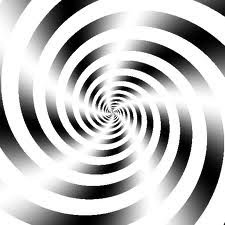 This quote refers that people may have different visualization of the same objects, because of an experience or a memory they may have with this certain person, place or object. this also refers to the different ways you can see an object, in different angles, this may give an image of a totally different object. Many people dont have the ability to percept objects in different ways. Perception alters the way I see the world, because optical illusions are present in very day life, and i am able to see different things in the same object. I can also percept things that happen to me, and find another way to interpret them
Suscribirse a:
Entradas (Atom)